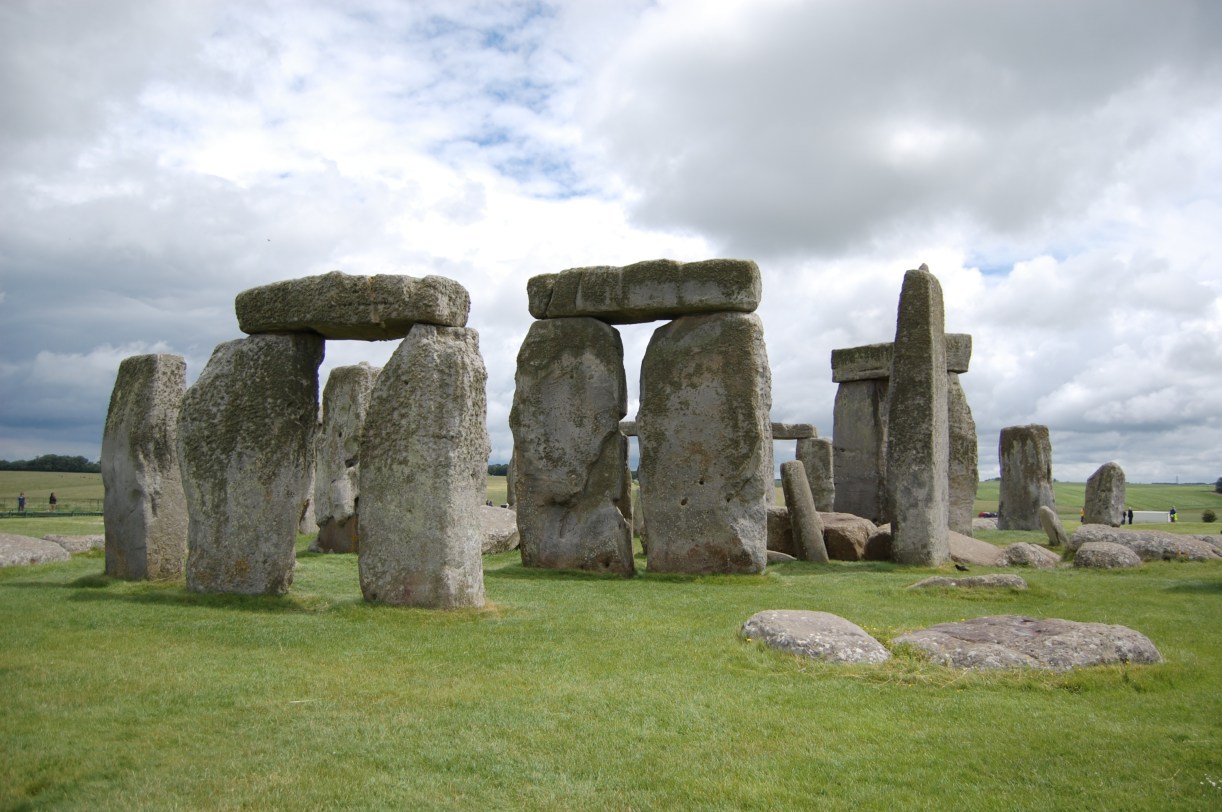
June 13, 2016 – Stonehenge was our first stop on a 14-day self-driven tour of the U.K. and Ireland. (Photo courtesy of Thom Popp.)
When my husband and I began planning our dream vacation, one of my “must see” places was Stonehenge. We’ve all seen photos of this famous stone circle located in Wiltshire, England, about an hour’s drive west of London. Archeologists have determined that this incredible structure was erected between 3000 B.C. and 2000 B.C.
These bluestones, weighing between two and four tons each, were most likely brought to their current location from the Preseli Hills in Wales, 150 miles away. Although some believe there may originally have been 80 stones, today only 43 remain.
There is a lovely visitors’ center where you can purchase tickets to visit the stones, grab a snack, and purchase a souvenir. Behind the visitor center, shuttles load anxious guests for a trip that takes only a few minutes by bus. For those who are in no hurry, it’s about a 30-minute walk. What you have probably not seen in photos of Stonehenge are the ropes around the perimeter that keep you from getting too close.
I happen to believe there is much more to these stones than meets the eye. I had hoped I might feel something when I stood among them, when I touched them. Unfortunately, we were only able to view this spectacular structure from a paved roadway that circled it. Due to serious erosion, visitors have not been allowed to walk among the stones since 1977. English Heritage apparently does permit full access during summer and winter solstice, as well as spring and autumn equinox. So if you have your heart set on getting close enough to touch these mysterious stones, I would strongly suggest you contact English Heritage for further details before you visit.
Unfortunately, we unknowingly visited one week before the summer solstice. However, true believers know, what is meant to be is meant to be. We were destined to be elsewhere during this special summer solstice, and that is a story for another day…
 Lisa Popp